The Future of Workforce Analytics: Smarter Teams with AI
Share This Post
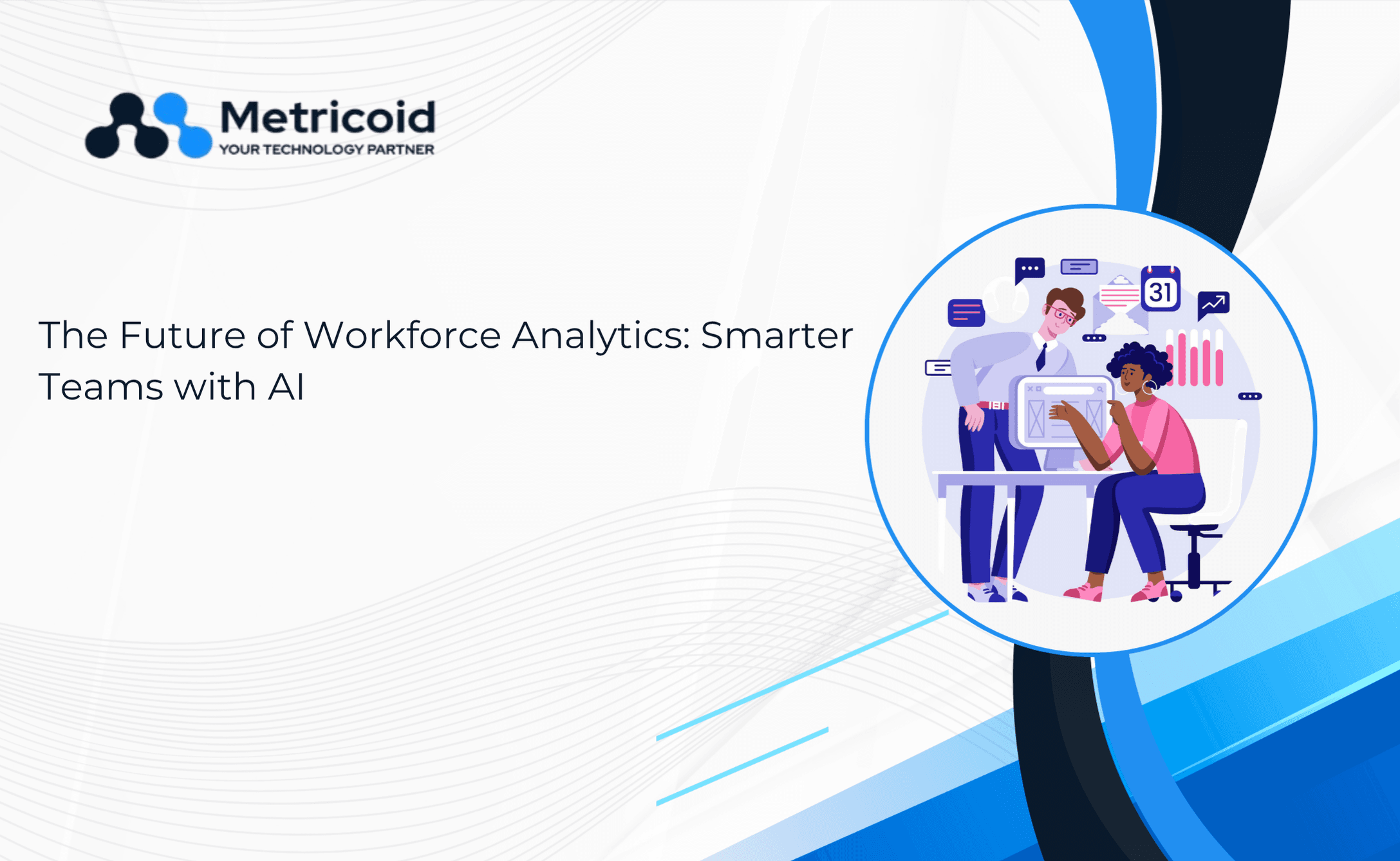
The Future of Workforce Analytics: Smarter Teams with AI
Introduction
In 2025, the workplace is no longer just a physical space. It has become a living, evolving ecosystem of data, decisions, and digital interactions. Every message, meeting, and milestone leaves behind patterns that reveal how people work, collaborate, and grow. The real question is not whether data can tell us something valuable, but whether we are truly listening.
A report from McKinsey shows that more than 70 percent of global executives believe analytics will redefine how organizations manage talent within the next five years. Similarly, Gartner predicts that by 2026, 60 percent of large enterprises will use AI-driven workforce analytics to guide people strategies and improve business outcomes.
Yet many businesses are still measuring performance the old-fashioned way using spreadsheets, static dashboards, and intuition. The gap between data collection and data comprehension continues to widen. This is where the story of intelligent workforce analytics begins, not as another tool but as a quiet revolution transforming how organizations understand productivity, engagement, and human potential.
The Unseen Challenge: Data Without Direction
Walk into any fast-growing organization and you will find data everywhere. Attendance systems, collaboration platforms, and HR dashboards generate a constant stream of information. However, without a unified structure or analytical intelligence, it quickly becomes noise.
Leaders often find it difficult to answer simple questions. Are teams performing efficiently? Who might be approaching burnout? Which departments are struggling with communication or task alignment?
In most cases, the challenge is not a shortage of data but a shortage of insight. According to Deloitte’s Human Capital Trends, 56 percent of organizations collect more workforce data than they can analyze effectively. Businesses today are data rich but insight poor.
This creates an environment where decisions are based on assumptions instead of accurate evidence, where performance reviews happen once a year instead of in real time, and where early signs of disengagement go unnoticed until they evolve into attrition.
In hybrid or remote settings, the problem grows worse. Traditional evaluation methods cannot capture real collaboration, contribution, or cultural alignment across distributed teams. Without modern workforce analytics, leading a business is like flying through fog without proper navigation.
The Human Cost of Missed Insight
Every delay in understanding workforce patterns has a cost. When organizations fail to detect signals early, the effects ripple through morale, productivity, and retention.
A Gallup study revealed that only 32 percent of employees feel actively engaged in their work. Low engagement costs companies around 8.8 trillion dollars globally each year, nearly 9 percent of global GDP.
The numbers are staggering, but the deeper cost lies in human experience. Talented employees often feel unseen, managers burn out reacting to avoidable problems, and recruiters spend countless hours replacing people who could have stayed. Each missed signal adds friction that compounds over time.
AI-powered workforce analytics helps uncover these invisible dynamics before they become crises. It allows organizations to move from firefighting to foresight, replacing reactive management with proactive leadership.
The Turning Point: From Observation to Intelligence
The turning point came when analytics met artificial intelligence. Traditional dashboards summarize data, but AI interprets it. Instead of only showing what happened, AI learns from historical and behavioral patterns to explain why it happened and what is likely to happen next.
Imagine understanding the communication rhythm of a department before collaboration breaks down, or identifying early signs of disengagement before performance declines. This is the level of clarity AI brings to modern HR operations.
Platforms such as MTrackPro make this possible. They analyze productivity patterns across departments in real time, helping leaders recognize inefficiencies and rebalance workloads. The purpose is not surveillance but support. By translating everyday digital interactions into meaningful insights, managers gain a clearer picture of team health and output.
Artificial intelligence does not replace human judgment; it strengthens it. It gives managers context, evidence, and empathy to lead more effectively.
Why Traditional HR Tools Fall Short
Conventional HR systems were designed to record data, not interpret it. They handled attendance, payroll, and compliance well but lacked the ability to connect performance data with engagement or behavioral insights. Even newer software solutions often operate in isolation, creating data silos that hide the full story.
In a world where teams operate across cities, time zones, and collaboration platforms, this fragmented view is no longer sustainable. Modern work produces multidimensional data. To interpret it meaningfully, analytics must evolve from static measurement to active intelligence.
This is where Aptasoft’s ecosystem provides a unified advantage.
The Aptasoft Approach: Turning Data Into Decisions
At Aptasoft, we believe the future of work must be intelligent, inclusive, and insight driven. Our HRTech suite connects every layer of workforce analytics, from recruitment to retention, into one cohesive framework.
MTrackPro goes far beyond time tracking. It detects patterns that reveal how teams collaborate, where workflows slow down, and how engagement levels change. Instead of simply recording output, it helps managers understand effort, focus, and performance in context. Learn more about MTrackPro here
Mpeople redefines how organizations understand employee engagement. It provides actionable insight into workforce morale, retention indicators, and culture dynamics, helping HR leaders design data-backed strategies that improve satisfaction and performance. Explore MPeople here
MtestHub introduces analytics into the hiring process. By using AI-based assessments and candidate performance data, it predicts cultural fit and future success, reducing bias and accelerating recruitment cycles. Discover MTestHub here
MScribe supports documentation and transcription in secure, compliant environments. It is designed for industries such as healthcare, legal, and finance, where accuracy and confidentiality are essential. Learn more about MScribe here
Together, these tools create an integrated intelligence layer that helps organizations move from intuition to certainty. The result is faster decisions, stronger engagement, and measurable improvement in both performance and trust.
Building the Foundation of a Smarter Workforce
A truly smart workforce is not just efficient. It is self-aware, adaptive, and supported by insights that empower people rather than control them.
When organizations embrace analytics ethically and transparently, data becomes an instrument of trust rather than surveillance. Aptasoft’s tools are designed around that principle, ensuring employee privacy while delivering clarity to decision-makers.
-
Transparency creates accountability.
-
Data nurtures fairness.
-
Predictive insight builds purpose.
Managers using MTrackPro can identify workload imbalance before it becomes burnout. HR teams using MPeople can spot engagement dips before they lead to resignations. Recruiters using MtestHub can match talent that aligns with company values and team dynamics from the very beginning.
These improvements do not just reduce costs. They create healthier workplaces, more loyal employees, and sustainable business growth.
Why the Time is Now
Global adoption of AI in HR is accelerating. The 2025 PwC Global Workforce Hopes and Fears Survey shows that 44 percent of employees already use AI tools to improve their productivity. Accenture reports that companies using AI-driven workforce analytics see as much as 30 percent higher efficiency and retention.
Organizations that delay transformation risk losing competitiveness. Data-driven HR practices enable agility, diversity, and innovation, all of which are central to long-term success.
Workforce analytics has shifted from being a back-office reporting function to a strategic advantage. Businesses that adopt it early are positioning themselves for stronger cultures and better results.
A Future Led by Insight
The future of workforce analytics will go beyond monitoring metrics. It will give employees tools to understand their own work patterns, strengths, and growth opportunities. It will allow leaders to align talent strategy with business goals through facts rather than assumptions.
AI has the power to make work more human by removing guesswork and bias. It bridges the gap between data and empathy, creating environments where people can thrive.
At Aptasoft, this is the future we are building. A future where every data point tells a story, every insight drives action, and every team becomes smarter together.
Discover the future of workforce analytics with Aptasoft today - Click To Book A Strategy Call Now
Share This Post
Subscribe to newsletter
Subscribe to receive the latest blog posts to your inbox every week.
By subscribing you agree to with our Privacy Policy.
Related Blog Posts
Stay updated with the latest trends and insights in technology, business strategies, and industry innovations through our blog.
AI in Recruitment: Transforming Hiring with Tailored Algorithms